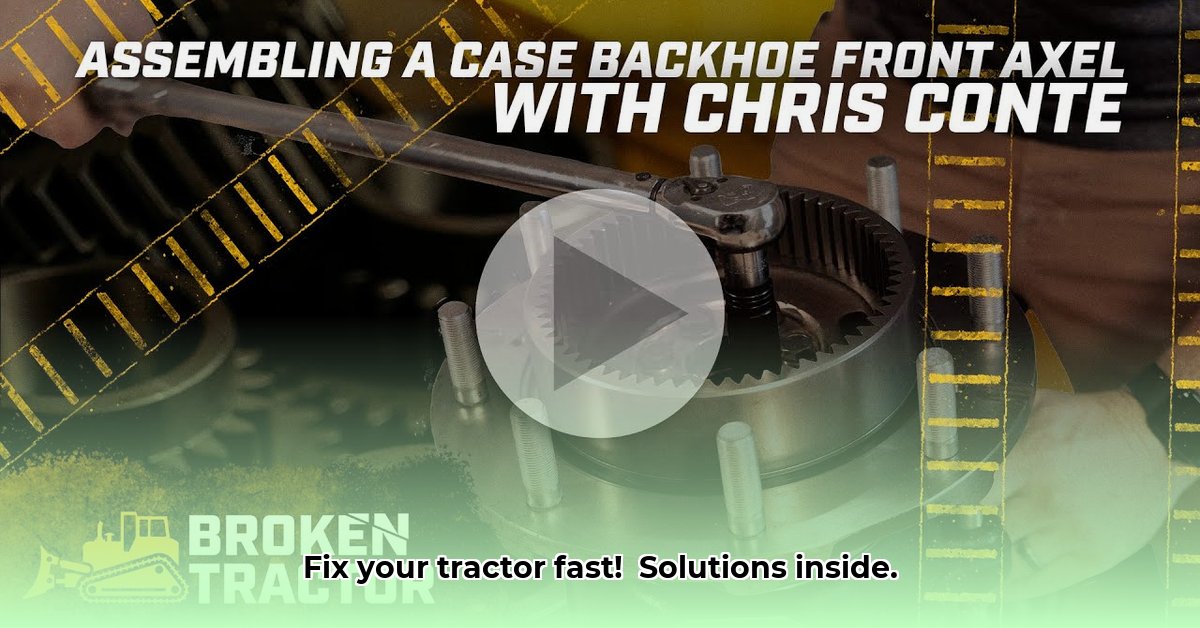
Finding replacement parts for your Case tractor, especially older models, can be frustrating. This comprehensive guide provides a step-by-step process to locate and install those elusive components, saving you time and money. Whether you're a seasoned mechanic or a DIY enthusiast, this guide offers practical solutions. For more Case tractor resources, check out this helpful website: Case Tractor Resources.
Understanding Case Tractor Part Numbers: The Key to Success
Identifying the correct part is crucial. Each Case tractor part has a unique number, vital for accurate ordering. Locate your tractor's model and serial number (usually on a plate attached to the machine). Use this information, along with a clear image of the broken part, to find the correct part number in your owner's manual or online Case IH parts catalog. This detailed information is the key to efficient part sourcing. Why waste time trying to describe a missing part when a picture is worth a thousand words?
Sourcing Options: Weighing Your Choices
Several options exist when sourcing Case tractor parts:
OEM (Original Equipment Manufacturer) Parts: Directly from Case IH, these offer guaranteed quality but are often the most expensive. Availability might also be an issue for older models. Are the high costs justified by the superior longevity?
Rebuilt Parts: These parts have been disassembled, inspected, repaired, and reassembled. They represent a cost-effective middle ground between new and used parts. However, always check the warranty and carefully inspect for signs of wear. How do you balance cost savings against potential reliability issues?
Aftermarket Parts: Produced by third-party companies, these are generally the most affordable but quality varies significantly. Thorough research is vital to avoid counterfeit or substandard parts. What risks are you willing to take for a lower price?
Used Parts: The least expensive option, usually found in salvage yards or online marketplaces. High risk of hidden damage necessitates a thorough inspection. Is the potential for saving money worth the increased chance of failure?
Evaluating Part Quality: A Critical Step
Before installation, inspect the part meticulously. Check for:
- Visible Damage: Cracks, dents, or other wear.
- Manufacturing Defects: Imperfect castings, rough surfaces, or poor fit.
- Corrosion: Rust or oxidation weakens the part significantly.
This thorough inspection applies regardless of where the part was sourced. What are the tell-tale signs of a poorly made or damaged part?
Finding Reputable Suppliers: Your Safety Net
Several avenues exist for finding reliable suppliers:
Online Retailers: Many online retailers specialize in agricultural equipment parts. Read reviews carefully and choose established businesses with a proven track record. How can you separate reliable from unreliable online retailers?
Local Dealerships: They often have access to a wider range of parts and can offer valuable advice. Convenience is a major advantage. What benefits do local dealers offer that online retailers may lack?
Independent Repair Shops: These shops often stock a surprising array of parts or have connections to reliable suppliers. What are the advantages and disadvantages of using a local repair shop?
Always check return and warranty policies for maximum protection. How important are robust return policies and warranties when choosing a supplier?
Installation Guidance: DIY or Professional?
Installing parts can be complex—especially for inexperienced individuals. Unless you are comfortable working with heavy machinery, it’s best to engage a professional. Improper installation can cause further damage or injury. Where can you find trustworthy local mechanic options?
Preventative Maintenance: Avoiding Future Problems
Regular maintenance is key to extending your tractor's lifespan and preventing costly repairs. Follow your tractor’s maintenance schedule diligently, performing regular oil changes, filter replacements, and lubricating moving parts. How can diligent preventative maintenance improve your tractor's long-term performance?
Case Studies: Real-World Successes
- A rebuilt transmission proved a cost-effective solution for a Case 580 backhoe transmission repair.
- A quality aftermarket hydraulic pump successfully replaced a failing pump on a Case 4450, resulting in significant savings.
These examples highlight the range of options available and the importance of careful consideration. What successes have you found in repairing or replacing parts on your Case equipment?
Remember, a systematic approach to finding and installing replacement parts will ensure your Case tractor remains operational. Careful planning and research minimizes downtime and expense. What other tips or tricks have you discovered for finding scarce or hard-to-find Case tractor parts?